Answer
Educational screen time for reading works best when a child is not just watching. They are listening, choosing, noticing pictures, asking questions, and making meaning with an adult nearby.
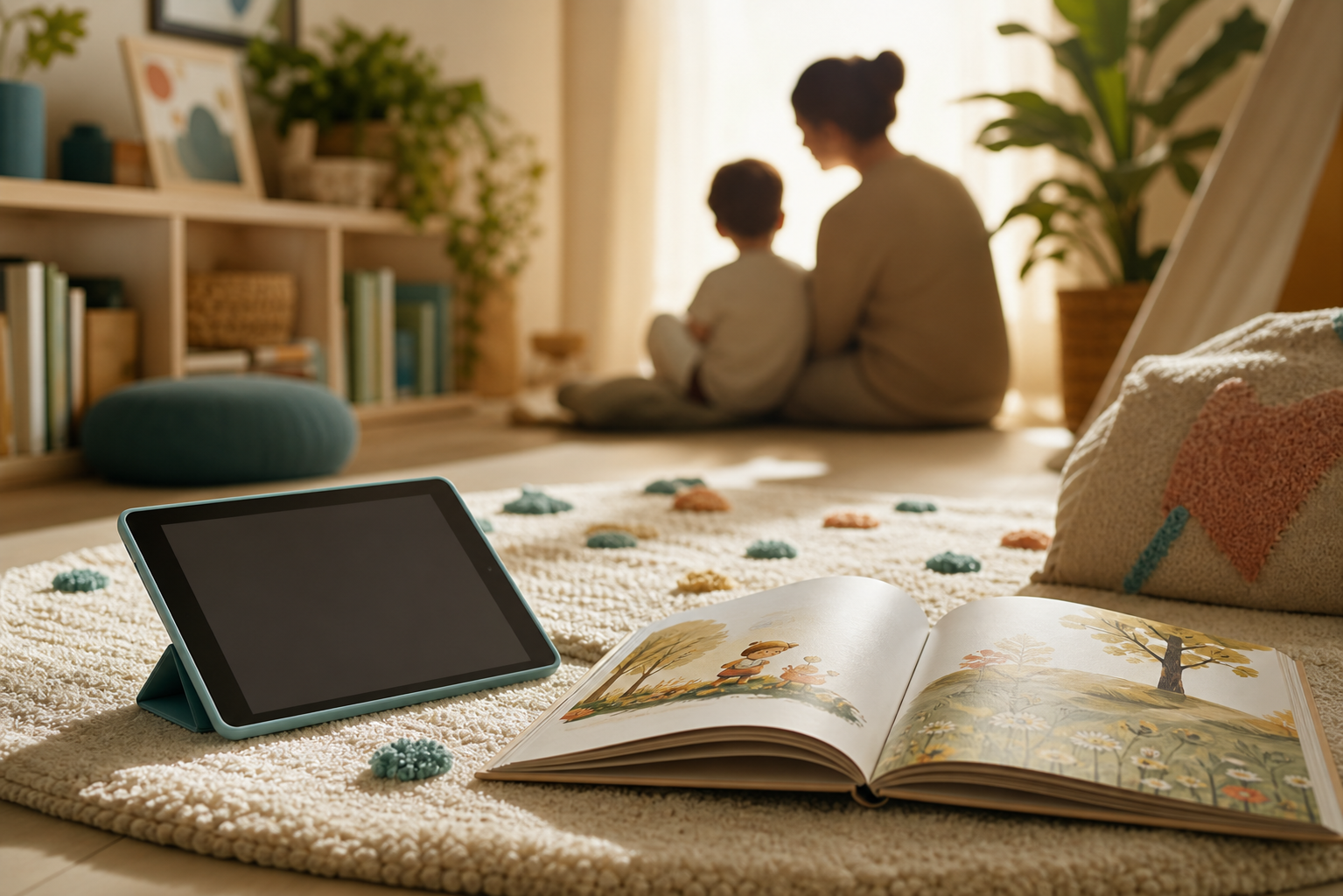
A tablet story is not automatically good or bad because it is on a screen. The better question is: does this screen moment still behave like shared reading?
Short version: if the screen invites a child into language, story, and conversation, it can support a reading ritual. If it mostly runs on autoplay, rewards, ads, or fast scene changes, treat it as entertainment instead of educational screen time for reading.
Educational screen time for reading: a digital story experience that supports listening, language, imagination, and conversation rather than passive watching.
Shared reading: a parent and child making meaning from a story together, through words, pictures, pauses, questions, and connection.
Educational screen time for reading checklist
Use this before choosing a digital story app, video story, or tablet reading moment.
- Does the child have a real story to follow?
- Can the adult pause, talk, and ask questions easily?
- Does the experience avoid ads, autoplay loops, and pressure to keep tapping?
- Is the pace calm enough for listening and thinking?
- Does the child leave with something to retell, imagine, or discuss?
If the answer is mostly yes, it may fit inside a reading routine. If the answer is mostly no, it is probably screen entertainment, even if it uses books, letters, or a narrator.
Why the distinction matters
Parents are often handed two unhelpful messages.
One says every screen is the same. The other says any product labeled educational must be fine.
Real family life is more nuanced than that.
The American Academy of Pediatrics encourages families to think about media quality, co-use, sleep, routines, and what screen time is replacing. NAEYC and the Fred Rogers Center make a similar point for young children: interactive media should be intentional, developmentally appropriate, and used in ways that support relationships and learning.
That does not mean a tablet story replaces every paper book. It means parents can look at the shape of the moment.
Is the child being pulled through content, or invited into a story?
What makes educational screen time more like reading
The strongest digital story moments still have the bones of a book.
They have a beginning, a middle, and an end. They give the child something to predict. They leave room for a parent to say, “Wait, what do you think will happen next?”
They also stay calm enough for language to matter.
A child can point to a picture. A parent can pause on one page. The story does not punish slowness or reward constant tapping. There is no endless stream waiting at the end.
That is very different from a video that keeps moving whether the child is thinking or not.
A simple comparison
| If the experience does this | Treat it as |
|---|---|
| Lets you pause and talk about the story | Closer to shared reading |
| Moves quickly from clip to clip | Entertainment |
| Builds around one complete story | Closer to reading |
| Rewards constant tapping or collecting | Game-like screen time |
| Gives the child choices about the character, world, or feeling | Story-led screen time |
| Pushes ads, autoplay, or unrelated videos | Not a reading ritual |
This is not about making digital stories perfect. It is about noticing whether the child is still doing the work of reading: listening, connecting, predicting, wondering, and retelling.
When a screen story can be a good fit
Educational screen time for reading may help when the bookshelf is not matching the night.
It can be useful when:
- a child wants a story about a very specific interest
- a parent needs a short, complete reading moment
- a grandparent or caregiver wants something easy to share
- a reluctant reader needs more choice before they will enter the story
- a family wants the child to help shape the character or setting
In those cases, the screen is not the point. The story is.
The parent can still sit close, pause, talk, and ask one warm question at the end.
When a paper book is the better choice
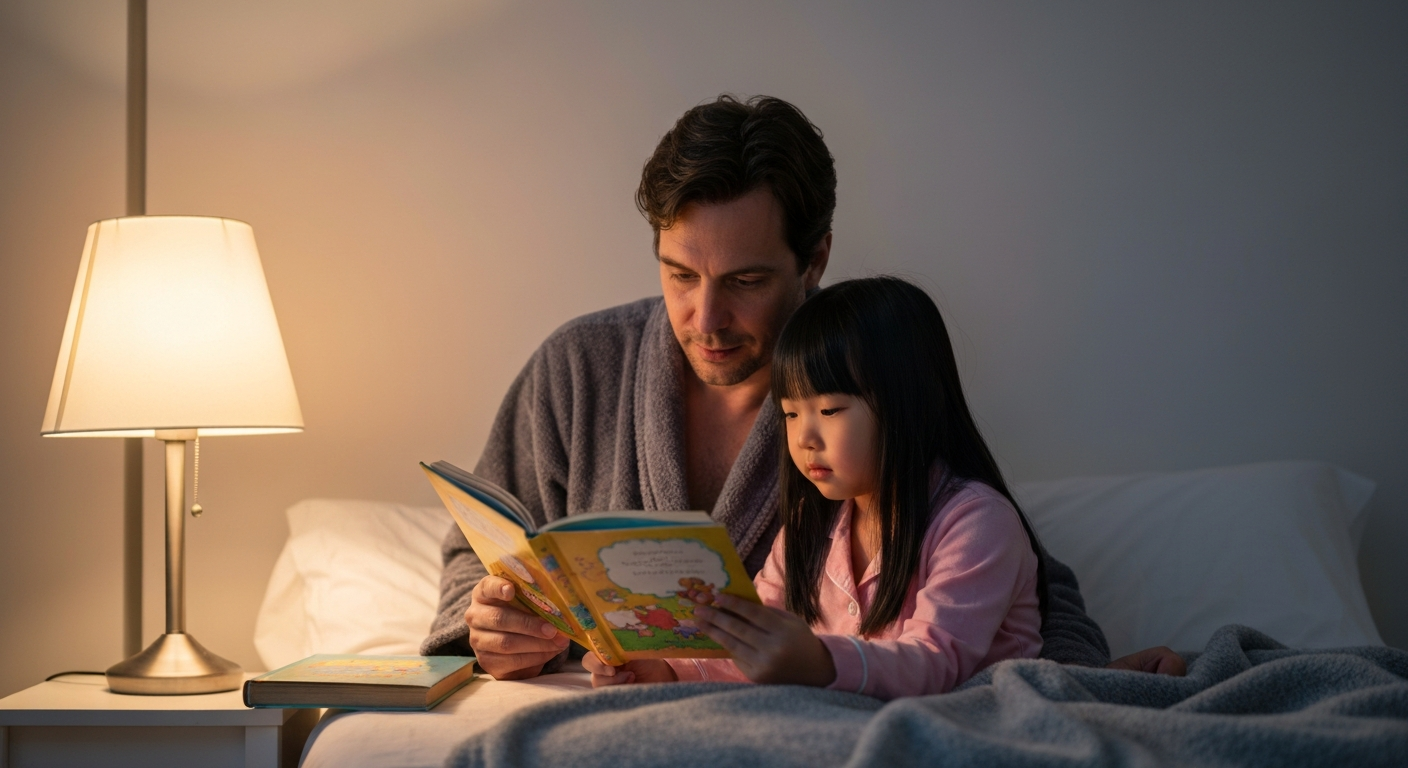
Choose a paper book when the child is already overstimulated, tired, or having trouble winding down.
Print also helps when the goal is closeness without another device in the room. HealthyChildren.org notes that print books remain especially strong for bedtime rituals and parent-child connection, partly because the format naturally invites slowing down.
A good rule for bedtime: if the device makes the room feel more alert, choose paper. If the story experience stays quiet, brief, and shared, it may still work, but keep the ritual simple.
How to make digital stories feel like reading
Try this three-step version.
- Choose one story before opening the device.
- Sit with the child and pause at least twice.
- End with one question or one retelling moment.
For example:
- “Which part would you tell someone else about?”
- “What do you think the character learned?”
- “If we made another story, what would you change?”
The goal is not to turn story time into a quiz. The goal is to keep the child’s mind inside the story after the screen goes dark.
Where Wistale fits
Wistale lets families create personalized, illustrated stories around a child’s age, interests, and imagination. That can make educational screen time for reading feel less like scrolling and more like choosing a book together.
You might create a short story about a child who loves sea turtles, a gentle mystery for a reluctant reader, or a bedtime adventure built around one calming feeling.
Keep it simple. Choose one interest, one mood, and one story length that fits tonight.
Related reading
If bedtime is the harder part, read Bedtime Stories by Age. If repetition is the issue, read why kids ask for the same story again. You can also browse Wistale reading guides or create a personalized story when the bookshelf is not matching the moment.
FAQ
Is educational screen time for reading still reading?
It can be, depending on the experience. A digital story that supports listening, pictures, language, and conversation is closer to reading than a fast autoplay video. The format matters less than what the child and adult are doing with it.
Is screen time bad for reading?
Not always. The concern is usually passive, fast, or excessive screen use that crowds out sleep, play, conversation, and print reading. A short shared digital story can be different from an endless video feed.
Should bedtime stories be screen-free?
Often, yes. Many families find paper books calmer at bedtime. If you use a digital story near sleep, keep it short, avoid autoplay, lower stimulation, and stay with the child.
What should parents look for in a story app?
Look for complete stories, calm pacing, parent control, no ads, no autoplay, and a clear ending. Bonus points if the child can help choose the character, topic, or feeling without being pulled into a game loop.
How can I tell if my child is engaged?
Watch what happens after the story. If the child retells a moment, asks a question, points out a picture, or wants to make a new version, they were probably making meaning, not just watching.
Sources and further reading
- American Academy of Pediatrics, “Media and Young Minds.”
- HealthyChildren.org, “Children and Books in a Digital World.”
- HealthyChildren.org, AAP shared reading guidance.
- NAEYC and Fred Rogers Center, “Technology and Interactive Media as Tools in Early Childhood Programs Serving Children from Birth Through Age 8.”